The 2020s has been an important decade for Canada’s relationship with the Indigenous Nations. We’re seeing large institutions like Canada’s federal government acknowledge and recognize the atrocities committed against Indigenous Peoples.
One incredibly important stride forward was the publishing of the Final Report from the National Inquiry into Missing and Murdered Indigenous Women and Girls (MMIWG). This more than 700-page report highlights interviews with more than 2,300 people affected by violence against Indigenous People.
These stories illustrate the challenges faced by women and girls, and the continued violence against members of the 2SLGBTQIA+ community. By reading this document, we can gain better knowledge on the marginalization experienced by Indigenous Peoples — and ultimately, have the wisdom and perspective to know what we can each do individually to help create a more equitable world.
The Four Key Areas of Rights for Indigenous Peoples
In addition to the 231 recommendations the report makes to help end violence and marginalization against Indigenous Peoples, it highlights four key areas of rights for Indigenous Peoples and provides explanations as to how each help work towards this goal of ending violence:
- Right to Culture – this right specifically highlights previous generations trying to assimilate Indigenous Cultures and Nations and how these efforts created the foundation for the marginalization Indigenous Peoples continue to experience today.
- Right to Health – this highlights how all people within Canada have the right to access health care. For countless people rooted in Indigenous Nations, this is an area where they have experienced discrimination — this barrier to health care further adds to the violence experienced by Indigenous Peoples.
- Right to Security – countless stories shared through this national inquiry demonstrated the near constant threat Indigenous Peoples face while living day-to-day. And it’s not only physical security: emotional, mental, social, and cultural security are all key to ending this disproportionate violence.
- Right to Justice – experiences through Canada’s justice system can be incredibly inconsistent for Indigenous Peoples. These disconnections through Canada’s justice system can further perpetuate the violent experiences of Indigenous Peoples.
Why Education is Foundational to Ending Violence
While the 231 recommendations and the four key areas of rights largely focus on larger-scale systemic changes, that doesn’t mean everyday people are powerless to help steer this change along.
In fact, just being more aware of the kind of violence that Indigenous Peoples are facing is the perfect foundation needed to see the kind of change that will help end this violence.
Any meaningful action starts with awareness and education. With the knowledge and wisdom of the issues, their roots causes, and what needs to be done to address this inequity, the better you can direct your own actions to be more equitable to people rooted in Indigenous Nations.
And the more people there are who fully understand the issues and how to direct their own actions, the more forward momentum we can see to finally seeing an end to this disproportionate violence.
The fire crackles in front of 14 Elders and Knowledge Keepers sitting in a circle sharing, reflecting, and trying to imagine a more positive future for their communities. They were all invited to Moonlight Bay Centre for a retreat to commemorate National Day for Truth and Reconciliation — a day that can be especially difficult for these Leaders in their communities.
Many of them have either witnessed firsthand the atrocities of residential schools or have close family members who have shared their own stories (if they came home at all). And while the Elders and Knowledge Keepers reflected on the past and the challenges of the present, a new feeling emerged, seemingly from the embers and ashes dancing off the campfire.
They felt hope for the future.

Thoughtful Reflections Sitting by the Water
While this retreat included much of what someone might expect to find at an all-inclusive resort, the true aim for this event was to pay homage to the hard work of Elders and Knowledge Keepers acting as near-constant beacons of hope, helping their communities to safer waters. And while grief and reflection were ever-present, so was friendship, comradery, love, and optimism that they will continue navigating troubled waters.
“Many of the Elders and Knowledge Keepers who attended told me they had no idea we had a property so close to the water like this,” says Janet Paskemin, Manager of Indigenous Cultural Supports. Moonlight Bay Centre sits on Wabamun Lake with wonderful views of the water and surrounding woods.
“Just being by the water can do a lot for Elders and Knowledge Keepers,” says Janet. “It can help them clear their minds, reflect more thoughtfully, and think much clearer. For a lot of this retreat, the Elders and Knowledge Keepers sat by the lake, sometimes talking but more often just in silence with each other.”

Comradery, Friendships, and the Gifts of Food
While some of the Elders and Knowledge Keepers who attended were longtime friends, just as many had never met — despite this, the comradery was more than evident. These bonds formed sitting by the lake, solidified by the fire, but it was in the kitchen where one of the strongest gestures took shape.
Food Sovereignty is an act where visitors to Indigenous Nations would receive food as a token of gratitude and friendship. True to honouring the customs and traditions from Indigenous Nations, one Elder, who was previously a Chef, insisted on making home-made pancakes for everyone at the retreat.
“In truth, he wanted to give something to his friends, the same way we were giving so much to everyone during that retreat,” says Janet. “It’s hard to understate how important gestures of honour, friendship, and love are for the Elders and Knowledge Keepers.”

Hope for the Next Generations
Janet recalls one thing she heard time and time again throughout the retreat: that the Elders and Knowledge Keepers see the work that’s being done for Indigenous Peoples by so many young people. She expressed how the Elders and Knowledge Keepers are so incredibly hopeful for the next generations to continue improving the lives of others.
We were honoured to host the 14 Elders and Knowledge Keepers at Moonlight Bay Centre to acknowledge National Day for Truth and Reconciliation. We’re proud knowing that these important leaders in their communities had an opportunity to not only rest and reflect but to connect, share, express, and revitalize.

Imagine trying to process the world around you when every sound, sight, and feeling seems turned up to the highest settings possible. This is a reality for some people who have fetal alcohol spectrum disorder (FASD). Like a migraine that can interrupt your executive function (the skills used to manage everyday tasks like making plans, problem solving, and adapting to new situations), this can be a major barrier for some folks to be stable and secure in their housing.
This is why we operate Hope Terrace, a supportive housing building specifically designed for people with FASD. Today, 34 people call Hope Terrace home and are gaining the knowledge and skills to live independently through the support that specifically addresses their unique needs.
The wraparound supports built within the building and its programs helps its tenants overcome their barriers to housing, learn to better manage their day-to-day needs to upkeep their housing, and ultimately gain independence to live with dignity and a good quality of life.
Good Quality of Life Starts with Good Food
When executive function is interrupted, it can be hard to tell what makes for good food that helps with physical and mental health. Hope Terrace’s community kitchen model helps to overcome this barrier by not only ensuring nutritious and delicious food is available to tenants, but that tenants are also empowered to make those choices and learn how to make well balanced meals.
Hope Terrace’s cooking program, called Cook’n’Eat, is supported by the on-staff occupational therapist and teaches interested tenants the basics of cooking, with an emphasis on timing out the different steps to preparing a meal. This helps promote further independence in tenants by teaching a transferable skill that they can apply to many facets of their daily lives.
This is just one of more than a dozen different food support programs at Hope Terrace that teaches tenants how to prepare meal kits, how to serve meals for the whole community, and even how to budget for essentials like groceries. In fact, we’re proud that 85% of the people who call Hope Terrace home are independently grocery shopping on a regular basis and finding better balance with their nutrition and their lives.

Tenant Empowerment through Collective Action
Many of the tenants at Hope Terrace expressed a need for a more prevalent voice in their day-to-day lives and learning how the building they call home operates. Seeing this as an opportunity to further develop transferable skills and independence, a six-person volunteer Tenant Council was formed to act as an intermediary between tenants and what would be considered their landlord at Hope Terrace.
Directly reflecting the needs and wants of the larger Hope Terrace community, this structured group receives feedback from other tenants and creates action plans to address these requests and possibly implement changes to reflect these needs. Recently, this group worked closely with the building and landlord to address some challenges with the heating and successfully uncovered solutions that improved the lives of their neighbours.
This group also acts as a distribution point when Hope Terrace staff has updates or changes they need to communicate to other folks in the building, ensuring there is transparent and healthy flow of information between staff and tenants.
Ensuring Over-Stimulation Can be Easily Managed
While a lot of amazing work can be done to help a person with FASD learn necessary life skills and gain better independence, a few bad moments of over-stimulation can bring back or create new challenges for folks. To ensure this barrier is overcome, we created a room specifically to help quell over-stimulation and balance out tenants’ sensory intake.
Called the Snoozelen, this room has adjustable lighting, sound, visuals, and soft-textured seating to bring down anxiety, stress, and other adverse outcomes that accompany over-stimulation. This has been an incredibly successful tool at Hope Terrace that’s helped tenants manage their emotional well-being long before it becomes a wider issue for other tenants and staff.

There’s Even More to Discover about Hope Terrace
These are just a few of the ways Hope Terrace supports people with FASD in securing and maintaining stable housing. In the past year alone, through the skills and knowledge gained from Hope Terrace’s programs, eight people have moved into fully independent living situations — one is even a proud homeowner.
We’ll be sharing a full presentation on November 21, 2024, in recognition of Housing Month. Join us for this noon-hour webinar session where we’ll go into more details about Hope Terrace — and you’ll have an opportunity to directly ask the people running Hope Terrace more about what makes this building so successful at helping people with FASD overcome their unique barrier to stable and secure housing.

Too many Edmontonians face a difficult decision every month — pay bills or pay rent.
This was the reality for Katherine (name changed to protect privacy) — and she almost lost her home. As a single mother of two with a part-time job and extra monthly support coming from Alberta Income Support, she was still falling behind and facing an imminent eviction.
After working with her employer to change her job to full-time, she lost her Alberta Income Support benefits and found herself still needing extra help to ensure she and her two sons wouldn’t be evicted from their home. With the eviction notice in-hand, she connected with our Community Bridge program for help.
The main goal of Community Bridge is to prevent evictions and ensure people at risk don’t experience homelessness. Through financial education, benefits navigation, and direct financial assistance, this program seeks to not only prevent immediate evictions, but also help ensure individuals don’t have to face these challenges again.
“Katherine came to us already taking the initiative to change her part-time work to a full-time job,” says Katrina John-West, Manager of Homelessness Prevention and Housing Support with Bissell Centre, where she oversees the Community Bridge program. “Her Alberta Income Support had ended and having a full-time job still wasn’t enough to help her catch up.”

How Community Bridge Helped Katherine
To ensure Katherine could break from this cycle, the Community Bridge team helped her in three areas to pay off her remaining debt and guarantee her housing stability. The first step was making sure Katherine could receive emergency income benefits from Alberta Income Support.
“What some folks don’t know about Community Bridge is we can act as advocates for people,” explains Katrina. “We can also make references to other sources of financial assistance that folks might not know exist.” In addition to advocating for Katherine’s Alberta Income Support emergency benefits, the Community Bridge team connected her with benefits from the Society of Saint Vincent de Paul. Financial benefits helped, but didn’t cover all her debts — which were collecting interest.
The second approach to helping Katherine came in a one-time, interest-free loan from the Community Bridge program. This lump sum assistance is, on average, paid back within one year of receiving it — even without any timelines or pressure from Community Bridge. “How quickly and frequently folks can pay back this assistance shows us how much we’re helping their financial situations,” says John-West. “It’s setting people up for the best successes possible so they can become empowered with their finances.”
The third type of support Katherine received was a referral to Civida, Edmonton’s largest affordable housing provider. This referral was for additional rent assistance benefits, but many qualifying folks also find new and more affordable homes with Civida — further breaking the cycles faced by countless Edmontonians.

Avoiding Eviction, Controlling Finances, and Finding Stability
Today, Katherine remains in her home with her two sons, now both teenagers and preparing for adulthood. She’s regained control of her finances, cleared out all her debts and arrears, and continues to work full-time while maintaining her household.
“Katherine is a really special success story,” says Katrina. “Many times, we’re meeting people who are in the middle of being evicted or aren’t able to work. Katherine was doing everything right and the odds were still stacked against her. Everything she needed was within reach — she just wasn’t sure where to look. I’m so proud that the team could point her in the best direction for her and her family.”
Thanks to support from ENMAX, the Community Bridge team can continue connecting with folks at risk and prevent them from being evicted and facing homelessness. “We believe in empowering our communities and helping more people access the essentials for a healthy, thriving life,” says Krista Moroz, Manager, Community Partnerships & External Relations at ENMAX. “By supporting Bissell’s Community Bridge Program, we’re not just helping individuals and families in crisis — we’re also investing in the long-term strength of our community and a brighter future for all Edmontonians.”
From January to October 2024, we helped 464 individuals, just like Katherine, facing immediate evictions from their homes. Best of all, 96% of the people we help through Community Bridge stay in their homes. We can’t thank organizations like ENMAX enough for their support — without our generous funders, we wouldn’t be able to offer the crucial help that’s needed throughout our city.
The role family plays in many Indigenous cultures can’t be understated. Blood familial ties and chosen families can hold the most sacredness and honour for Peoples in Indigenous Nations. The Community at Bissell Centre is no different.
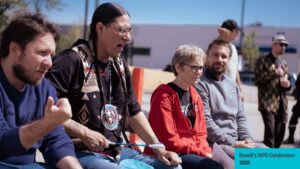
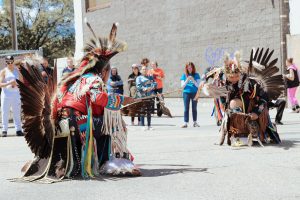
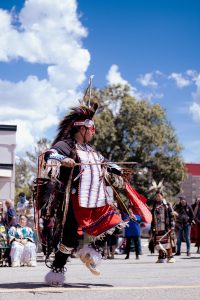
Those strong family ties are especially prevalent at our National Indigenous Peoples’ Day (NIPD) event outside our Community Space (10530 96 Street) every June 21. This is a day of celebration where we block off part of the street, invite performers and artists to share their crafts, and serve some of the best Indigenous cuisine you can find in the city.

The Reverence held for Elders
Honouring Elders is one of the most important customs of NIPD. The knowledge and teachings these individuals hold in the communities not only preserves the traditional ceremonies and rituals that bring so much vibrancy and life to Indigenous Nations – they can also help guide individuals through challenges and onto the most life-affirming paths.
“One of the most important services we can offer with Bissell’s Indigenous Engagement Program is connecting individuals to Elders,” explains Sarah Higgins, Director of Indigenous Engagement and Integrated Family Services – and a Red River Métis woman. “The teachings and guidance Elders can provide and the connection they foster to Indigenous Nations can help a person decide it’s time to reach out for further supports in their unique journey out of poverty.”
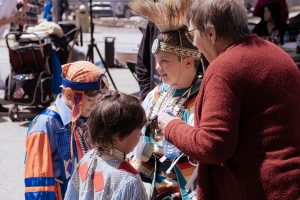
At the NIPD event, you’ll see a tent specifically for Elders to sit in. They’re often accompanied by children from Indigenous Nations, as well, symbolizing how their knowledge will be passed down through generations to ensure the culture and traditions remain a vital part to one’s Indigenous identity.
The Crucial Chosen Families Built in the Community
For people accessing the services at Bissell Centre, families by blood aren’t always a part of their lives, yet the importance of family never really goes away for a lot of folks. Creating new chosen families then becomes a part of life in the community.
“It’s not uncommon to see folks in the community calling each other uncle, aunty, or cousin because this is the family they’ve built for themselves,” says Higgins. “Just like a family, these are support systems for each other and we see these connections as real family – just the same as any blood tie.”
Families and communities coming together to celebrate the resiliency of Indigenous Peoples shows how important NIPD is for the folks in downtown Edmonton. And no matter what that family looks like and who makes up that unique family unit, NIPD will have space for all who attend to celebrate the strength, culture, and customs from Indigenous Nations.

We can’t say enough about our Community Space. This is the central hub where folks can come by for a hot meal, hot shower, fresh clothes, and to build relationships with people to grow their support network.
This space is invaluable to the folks who access its services every day. And, this is why our biggest fundraiser of the year, our Coldest Night of the Year walkathon, sees money raised going directly back into the operations and programs in the Community Space. For a lot of folks, this space is so much more than a warm, indoor place to meet daily necessities – it can also be the first step towards finding their unique pathways out of poverty.
Relationships are everything in the Community Space.
While things like meals and showers might be what first brings people through the doors, they soon learn what other programs might help them along. We offer programs like housing, employment, and mental health, to name a few, which help uncover what barriers people are facing. As staff work to build relationships with people to help find their strengths, folks can start recognizing how best to address these root causes.
No two experiences with houselessness are alike. Building positive relationships can help people recognize their strengths and resiliency – ultimately helping them find their path out of poverty. And, when they’re ready to take those first steps in their journey, Bissell Centre staff help find the resources they need to live a good quality of life.

Every journey is unique – and everyone gives back differently.
Doug has been coming to the Community Space for a few years now. In his own words, it’s his home away from home. The relationships he’s built are like family to him. And like any good family, he finds ways to give back.
The main way Doug gives back to the Community Space is by volunteering in the Community Closet, helping folks find new clothes. Other times, Doug walks around the encampments nearby to see if anyone needs any help. Any way that Doug can help, he wants to offer it to the community that’s given him so much.
“If it weren’t for Bissell Centre, I think we’d all be lost,” says Doug. “They’re helping me out, so I want to help them out too.”
How you can help too.
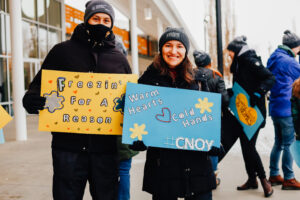
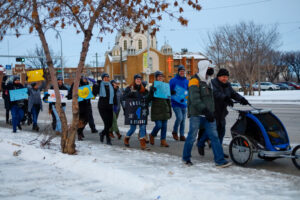
This year’s Coldest Night of the Year fundraising walk sees all proceeds raised going directly back to the Community Space to support its invaluable operations and programs. Start a team, raise some money, and bring out the whole family for a walk downtown on February 24, 2024. Thank you to all our event sponsors, including our Lead Sponsor Capital Power for providing the single largest sponsorship contribution we have ever received.
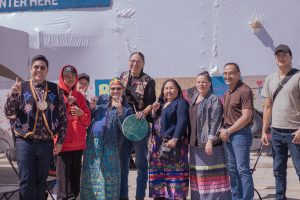
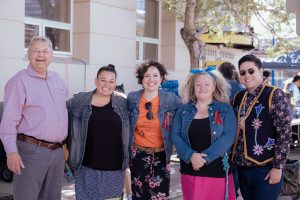
Bissell’s National Indigenous Peoples Day celebration weeks ago brought 96 St. right outside Bissell to life. Bissell Centre has been celebrating National Indigenous Peoples Day, proclaimed in 1996 by the Canadian Government, for well over a decade! This year, it was so much more than a block party– our team made sure this was a celebration to remember.
Keeping Traditions Alive
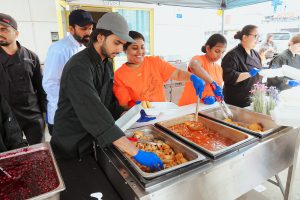
Our Food Services kitchen team made traditional stew and Bannock for everyone who attended. In total, they served more than 900 meals! Elders from the community held a traditional pipe ceremony to kick things off. They shared stories of struggle and expressed why the customs and traditions they grew up with are so important to folks from Indigenous communities.
Energetic Local Performances
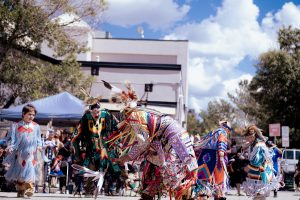
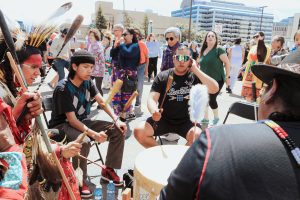
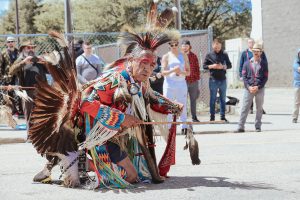
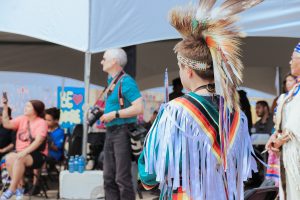
Families enjoyed the traditional hand games from Indigenous communities. Plus, dance and music performances from the Thunder Lake Singers & Dancers and flutist Theo Waskahat. The block was alive with music, drumming, and dancing for the whole community to enjoy.
Sharing and Learning Together
National Indigenous Peoples Day is always an amazing celebration, but this year’s was truly one to remember. We’re so happy and grateful for everyone who came out, participated, shared their gifts, and helped make sure Indigenous customs and traditions will stay alive for the people who need them most.
National Indigenous Peoples Day 2023 Photo Highlights
In 2022, Bissell Centre took a long hard look at itself and asked what can be a scary question – what are our 2SLGBTQIA+ team and community members experiencing here? What does Pride at Bissell look like? Are these folks being embraced and celebrated? Are they comfortable being their truest selves here?
41 team members participated in a survey focused on 2SLGBTQIA+ issues – 12 from 2SLGBTQIA+ communities. The results of the survey were promising, and a lot of organizations would take that as a sweeping success and end their efforts there. Instead, we wondered how best to push our organization even further.
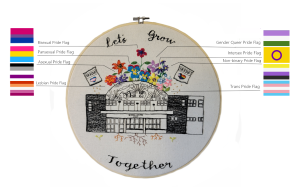
Through the results of this survey, summer intern J. Heber looked at the qualitative stats, thought about how they represented the diverse 2SLGBTQIA+ presence at Bissell Centre, and created a fibre art piece to represent that diversity across the organizations.
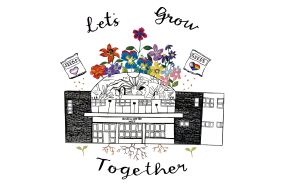
It is an expression of all the different flags and colours that express the different gender identities and sexual orientations that makeup Pride. Today, it proudly hangs in our Community Space. It stands as a reminder to folks that our diversity is our strength, and inclusion is essential. It also features seeds and the words, “Let’s Grow Together,” demonstrating the seeds of compassion and the thirst for knowledge that helps us all better understand and appreciate one another.
We’re going to let our 2SLGBTQIA+ staff members speak for themselves. Exploring, in their own words, how Bissell Centre is working to improve equity for 2SLGBTQIA+ folks, what their experiences have been like at Bissell, and what Pride month means to them.
Allen
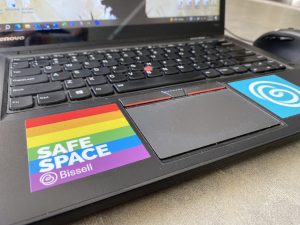
Bissell Centre gives out free rainbow stickers to everyone. I want to point this out first and foremost. It’s the first thing I think about when I think about how Bissell Centre is a safe space.
I joined Bissell Centre in 2020, and I wasn’t sure if I should be open about my gender identity. I saw a lot of staff here be comfortable and open and safe with who they are. Everyone here makes the effort to use my preferred pronouns (he/him) – and anyone who mistakenly uses the wrong pronouns is quick to apologize and correct it. That makes me feel respected and cared for by Bissell Centre.
Especially compared to my home country, Bissell Centre is welcoming to who I truly am. Here, I get to show my Pride without shame or any fear. I get to be open, and that’s important not just for me but for anyone who wants to express their Pride.
Even our community participants treat 2SLGCTQIA+ people with respect and equality. No one ever has anything negative to say about the clothes we choose, how we present, or how we choose to look according to our gender identity. Having this freedom and acceptance is so important for 2SLGBTQIA+ folks and how we can contribute back to our communities.
Clinton
When I was placed at Bissell Centre for my social work practicum, I was nervous about entering a new space. Being a member of the 2SLGBTQIA+ community, I am always wary when entering a new space. I don’t know if it’s safe, if I will be harassed or if I can truly be myself.
I remember about a month into my practicum, I mentioned how I noticed there wasn’t really any noticeable visual representation to let new staff and community members know that Bissell is a queer-friendly space. So, we came up with the idea for me to create a 2SLGBTQIA+ resource list for both staff and community members.
Then, I started noticing pride flag stickers placed on doors and laptops. My supervisor told me because I had the courage to identify the gap between Bissell and the queer community, she ordered gender-neutral bathroom signs for the bathrooms in the Community Space. I couldn’t believe that I was a catalyst for these changes. Bissell Centre is not just another group that celebrates pride once a year. They listen to the concerns people have and do what they can to improve.
The community members make Bissell Centre different too. I often get comments that I give off two-spirit energy. I learned that two-spirit folks in Indigenous culture are sacred, which makes me feel honoured. I don’t currently identify as two-spirit – the community members made me curious, and I have since been exploring that side of myself. Because the community members and the staff have created a judgment-free space, it has allowed me to safely be my true self.
Bissell Centre’s Thrift Shoppe has always been a valuable resource for us. It’s a place where we can help ensure that our community members, friends and neighbours have a place to purchase good quality products at very affordable prices. It’s where we are able to get donations to help stock our Community Closet, providing household necessities and clothing to severely impoverished individuals and families as we work to help them transition out of poverty. Our Thrift Shoppe is also, apparently, one of Edmonton’s best kept secrets!
When Edmonton Journal columnist Michael Hingston tweeted about his visit to the Thrift Shoppe, the response he got was “SHHH!!! That’s the SECRET BOOKSTORE!”
Hingston wasn’t content keeping it a secret though, writing about our amazing volunteer Margaret Mooney, and how much he enjoyed the store, the stock and the unbeatable prices was his way to share this rare gem with fellow book lovers. He later tweeted “today’s column, about #yeg’s best-kept bookstore secret, is my all-time favorite.”
What wasn’t mentioned in the article was that the Thrift Shoppe is a vital resource and a successful social enterprise for Bissell Centre. With last year’s sales through the store totalling almost $900,000 and the net proceeds supporting our programs that move people out of poverty, it’s a fantastic shopping trip for you, and a great source of support for Bissell Centre.