Data driving how we deliver services remains critical at Bissell Centre — the way we collect, display, and interpret information received a huge boost thanks to a group of students.
Over summer 2026, Bissell Centre hosted 13 summer interns from ATB Financial on a project to help refine how we gather feedback from program participants. The team innovated our data collection processes — integrating the ability to compare data across programs to gain clearer pictures on how improvements can be made to services.
ATB’s Early Talent Specialist Kimberley Dart explains its summer student program, called ATB 101, aims to, “unleash high performance by equipping our summer interns with the foundational tools needed to jump-start their careers.” Around 2020, the program’s focus shifted to community-based projects, partnering with different organizations to help them refine and improve aspects of their operations.
“We first partnered with Bissell Centre in 2024, and it was an outstanding experience,” says Dart. “When seeking meaningful project opportunities in Edmonton this year, returning to collaborate with Bissell Centre was a natural and exciting choice.”
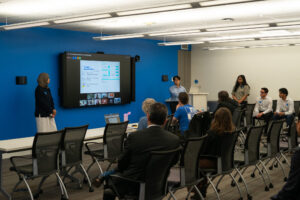
The student project
This year’s ATB 101 project was especially impactful because student groups from both Edmonton and Calgary collaborated on the project. The students ventured to better standardize the data programs collect from participants sharing their experiences with Bissell Centre, automate much of the data collection process, and create a dynamic and cohesive dashboard to easily gleam insights and have participant feedback directly informing how we can improve service delivery.
Emily Desousa, one of the student leads on the project explains she had limited knowledge about Bissell Centre initially. Her excitement about the project grew as she delved deeper into the programs and services.
“Bissell Centre does incredible work, and we really wanted to make sure we helped them help as many people as possible,” says Desousa. “Our hope is that the surveys will help expand Bissell Centre’s outreach and bring more awareness to the programs offered to the community.”
The team of students investigated all aspects of our data collection, from program participant surveys to the information dashboards staff use to make program decisions, standardizing the information collection process and displaying consistent data for cross program comparisons.
“This provides Bissell Centre with useful insight into how the community is interacting with programs — allowing for meaningful changes to serving the community,” says Desousa. “By refining the data collection process, Bissell Centre has the ability to connect with their participants on a deeper level.”

Pride in helping the community
The team of students expressed their pride for how they were able to deliver a set of tools that will help to collect meaningful information from participants and visualize it to easily see areas for improvement and incite change.
“The teams at Bissell Centre can use the dashboard at a glance to get a general understanding of participant feedback, or they can use it to look deeper at the reasons for some of the results,” says Desousa.“I think the most rewarding part of working on this project was knowing that my contribution would ultimately help improve someone’s experience within the programs, hopefully improving their life.”
Eliminating poverty is a collective responsibility — ATB and the summer interns stepped up and helped rebuild a vital part of how we’re working to strengthen the community. Thank you to the incredible group of students for your contributions towards our data collection practices. And thank you to ATB for continuing to be an invaluable partner in our mission to remove barriers and walk alongside people as they come out of poverty and homelessness.
There are countless ways that you could help make an impact on your community — just like these students did. Reach out to engagement@bissellcentre.org if you have an idea for how you could help us eliminate poverty in the community.
Did you know Bissell Centre helps families with children entering school? Bissell Centre receives supplies each year to give to families with children about to enter grade one through our Family Support Services team (find the contact information below).
This is just one of the low or no cost supports available to families facing barriers to affording the growing costs associated with sending children to school. Navigating all these services can be complicated — Bissell Centre’s Family Support Services team can help you uncover the supports that will work best for you and your family.
If you want to meet with our Family Supports team, you can find them at the Bissell Centre Service Hub at 10527, 96 Street. You can contact our Family Supports team directly:
If you’re reaching out to any of the services on this list, please visit their websites for their criteria. For a full list of additional services, call 211.
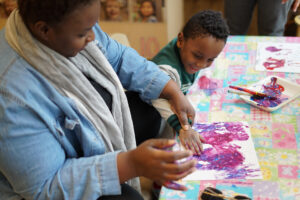
School and Education Technology
Bissell Centre Family Support Services — supplies are limited. Please reach out directly to learn more about what’s currently available.
Income Support for School Expenses
You could be entitled to receive support from the Government of Alberta to help pay for school expenses. Qualified families can receive annual financial assistance for school expenses:
- $63.00 per year per child aged 4 or 5 or in kindergarten
- $121.00 per year per child aged 6 to 11 or in elementary school
- $208.00 per year per child aged 12 or older or in junior high or high school
Click to learn more about how to qualify and how to apply for this benefit.
School Supplies – Pencils, Paper, Binders, etc.
Many schools offer programs to supply children from qualifying families in need with school supplies for the year. Contacting your school if your first best step to ensuring your children have everything they need for the school year. If this option isn’t available to you, here are some community-based resources that can help.
Can Man Dan — the 14th annual We’re Here For Ya Day will be on Sunday, August 23, 2026, at Shadified Salon & Spa (12222 137 Ave NW Edmonton, Alberta). This is an annual event where the Can Man Dan organization provides free backpacks full of school supplies for families who qualify. Registration is required to receive a backpack full of school supplies for the year and closes on August 16, 2026. Click to be taken directly to the registration page, which includes further information about this program.
Reuse Centre
FIND
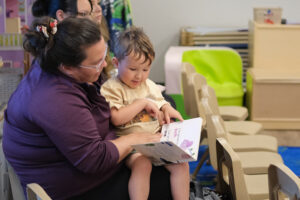
Free or low-cost clothing for Back to School
KARA Family Resource Centre – The annual Kicks of Kids event is coming up on Saturday, August 22, 2026, at Trinity Reformed Church (13427 57 Street, Edmonton). Families can receive footwear for all children going back to school in the fall.
Mill Woods United Church
Saint Vincent de Paul
Building Hope
Amity House
Care Closet
Bissell Thrift Shop
Mustard Seed Thrift
Free Food or Meals for Lunches
Building Hope
C5 Hub Food Pantry
Candora Society
Hope Mission
Freedom Centre Church
Edmonton Food Bank
Food Not Bombs
Wecan Food Baskets
Native Healing Centre
Native Friendship Centre
Pantry N More’
Bethel Church
Tegler Youth Centre – School Lunch Program
One of Bissell Centre’s largest and most joyful celebrations of the year is coming back with even more performers, food, activities, and cheer for the whole community.
What: National Indigenous Peoples Day Celebration
Where: Outside of Bissell Centre – 10527 96 Street
When: Friday, June 19, 2026, from 11:00 a.m. to 3:00 p.m.
Featuring art, performances, stew and bannock from Bissell Harvest Catering, and even an appearance from the children at Bissell Child Care.
“Holding this celebration is incredibly important for many of the people who come to us seeking support,” says Heather Slade, Bissell Centre’s Manager of Indigenous Engagement. “Acknowledging this important day helps so many as they heal from the trauma of colonialism.”
This Year’s Headliners at National Indigenous Peoples Day
The headline performers at this year’s NIPD celebration are Adrian LaChance and the Running Thunder Dancers, taking place from noon to 2:00 p.m. Their performances will include traditional drumming, singing, and dancing — including a round dance as a memorial for all the loved ones in the community we have lost over the years.
Adrian LaChance and the Running Thunder Dancers have been performing traditional Indigenous dancing and drumming since 2010, and facilitating workshops to better support individuals, families, and communities through cultural connection, healing, and personal growth. LaChance himself is renowned for his powwow dancing and drumming. He has been showcasing the culture he carries from the James Smith Cree Nation across the world, including through Europe, Asia and New Zealand.
A Celebration for the Entire Community
“Seeing the community come alive for this celebration is always so heartwarming,” says Slade. “NIPD reminds me about the hope I have for our vision to see an end to poverty in our community.”
Bissell Centre’s annual NIPD celebration is just one of the many ways its Indigenous Engagement team makes space for ceremony, culture, and healing — guiding both people in the community and Bissell Centre as an organization.
“With so many people we support coming from Indigenous Nations, ensuring Indigenous culture is integrated into what we do is crucial for their healing,” says Slade. “Bissell Centre is continuously seeking to be an ally with Indigenous communities. Our NIPD celebration is just one way we honour the resiliency of Indigenous communities.”
What if the compassion and care you’ve shown throughout your life could continue creating change for generations to come?
Even leaving 1% of your total estate in your will to Bissell Centre can have a huge ripple effect on those looking for support. It might not sound like much, and you’re still leaving 99% to your family — but even this seemingly small fraction of your total estate could help low-income families have access to necessities for raising healthy little ones, people looking for housing have support readily available, and those who are at risk of losing their homes have access to financial support and education.
Best of all, you don’t need great wealth to create lasting change. Your future gift is more than generosity. It’s hope in action that ensures long after you’re gone, your values live on in a stronger, more caring community.
How to leave a legacy with Bissell Centre
Did you know Willpower can help you calculate what impact a 1% planned gift in your will could have on an organization like Bissell Centre? Its suite of free tools and advice can help guide how best you can leave a legacy of giving and community care. But the best advice it offers starts with making sure you speak with your lawyer or financial planner about the kind of gift you want to leave.
After you talk about the financial realities of your estate with an expert, adding Bissell Centre to your will is remarkably easy. There are a few details you need to make sure you include:
- Bissell Centre’s Registered Charity Number — # 118810829RR0001
- Bissell Centre’s Address — 10527 96 Street, Edmonton, AB., T5H 2H6
Once you add these details to your will, along with what percentage of your estate or total gift you want to leave, then your legacy of care for your community is set and you’re continuing to help countless individuals and families find their paths out of poverty and homelessness.
The continued impact from your legacy
In 2025, Bissell Centre provided support to 8,709 unique individuals through our tax clinic, financial education program, housing services, family services, Indigenous cultural supports, and more. We housed 246 people, helped 581 people avoid eviction or utility disconnection, and supported 2,864 people with their tax returns.
This is only one year in Bissell Centre’s more than 150 years of supporting Edmontonians in the downtown community. Your planned gift can help us continue our mission to remove barriers and support people as they move out of poverty. With your support, we will see our vision of eliminating poverty in our community become a reality.
Leaving your legacy to Bissell Centre in your will makes a difference for someone trying to find secure and stable housing, a family struggling with daily essentials, or a whole community finding hope. With careful planning and preparation today, you can help create a better tomorrow for everyone in your community.
Reach out to your legal or financial advisor or contact Terry Tobin at ttobin@bissellcentre.org to learn more about how you can make a lasting impact on the community.
Diapers and formula are essential for raising a happy and healthy family. High costs are making it harder for families experiencing poverty to find stability — often struggling to afford these necessities and there are few programs than can help.
People in Alberta with infant children spend between $900 and $1,200 each year on diapers. On average, infants use eight to 10 diapers each day and without regular changes babies are at risk of diaper rash and other illnesses
For people with limited resources, providing necessities for an infant can seem insurmountable. That’s why on May 1, we launched Tushies and Tummies as a 10-day Mother’s Day Sprint to collect diapers and formula for families with young children. Our Family Services program provides diapers and formula to families in need and is one piece that can help a family break the generational cycles of poverty.
To continue this important program we need support from our community, including you!
Why Donate Diapers?
Donating disposable diapers can be crucial for families facing multiple barriers. Providing free diapers means families in need don’t worry about running out, and instead can focus on keeping their children clean, healthy, and happy.
Families without regular access to disposable diapers might try:
- Changing them less often.
- Leaving wet/soiled diapers on their children for full days.
- Using other materials like newspapers or tea towels as diapers.
To attend most child care centres, caregivers also need to provide their own disposable diapers, creating another barrier for people accessing programs like Bissell Child Care’s free respite care. The added stress can increase anxiety and be detrimental to mental health for both caregivers and children and even compromise the bond between child and caregiver.
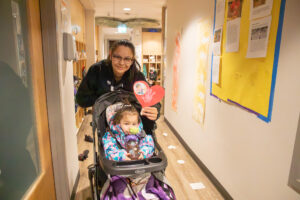
Family at Bissell Child Care.
Reasons to Donate Formula
Ensuring children receive all the vitamins and nutrients they need is critical to their development. While mother’s milk is the ideal, it isn’t always an option.
Donating formula becomes a lifeline for hundreds of families across the city accessing our Family Supports program. In 2025, this program helped 291 families with essentials like diapers and formula. We also provided referrals and navigation to other supports that help keep families healthy and strong.
It takes a community to keep children healthy and strong. Your donation of diapers and formula today keeps tushies clean and tummies full, relieves stress on families as they navigate their pathway out of poverty, and helps strengthen the community for future generations.
For this Mother’s Day, help ensure families have what they need to raise healthy and happy little ones. We have drop-off locations for diapers and formula across Edmonton and in Sherwood Park — and they’re accepting donations right up until Mother’s Day on May 10, 2026!
Even after Mother’s Day, we’re always accepting diapers for all ages and sizes and formula donations. They can be dropped off at our Bissell Thrift Shop at 8818 118 Avenue every Monday to Saturday from 10:00 a.m. to 4:30 p.m.
People across the greater-Edmonton region are invited to Bissell Child Care (9331 105 Ave. Edmonton) on March 28, 2026, from 10:00 a.m. to 2:00 p.m. for its spring open house. Bissell Centre’s child care program is catered to children newborn to six-years-old, with spaces reserved for families needing full time care or respite care.
“This is an excellent opportunity for parents to see first-hand what makes Bissell Child Care so unique,” says Jaye Brown, Manager of the Early Childhood Development Program with Bissell Centre. “This is a space where programming has benefited countless children and continues to give them an incredible start to life before they enter kindergarten.”
A History of Quality Child Care in Edmonton
Bissell Centre has been running a respite child care program since the 1970s, expanding to offering full-time child care services when its new child care space opened in 2020. Children attending Bissell Child Care receive one meal and two snacks every day (provided by Bissell Harvest Catering), can attend field trips all summer long, and have access to specialized supports — all at no additional cost to parents.
“Bissell Child Care is not only for families living in the downtown core and experiencing instability,” says Brown. “We are an inclusive environment that recognizes how everyone can be a part of this community and we welcome all children and their family.”
Crucial to Bissell Centre’s Mission in the Community
Guests can treat themselves to light snacks and refreshments as they explore the nature-inspired space where children play, learn, and thrive. Educators and leaders will be on-site during the event to answer questions and provide guided tours with more information on what parents can expect when sending their children to Bissell Child Care.
Bissell Child Care is just one of Bissell Centre’s social enterprises that seeks to help fund Bissell’s crucial programs: also including Bissell Thrift Shop and Bissell Harvest Catering. All funds raised are directly invested back into programs helping people uncover their unique paths out of poverty and homelessness — increasing Bissell Centre’s capacity to meet people where they are at and help strengthen the community.
Close to 400 walkers on more than 60 teams walked through downtown Edmonton on February 28, 2026, for Bissell Centre’s ninth annual Coldest Night of the Year fundraiser. More than $161,000 was raised to go towards Bissell Centre’s programs in housing, financial empowerment, eviction prevention, family supports, and Indigenous cultural supports.

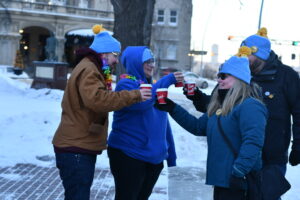
Temperatures hit as low as –24 degrees that night with wind chill, but it didn’t deter any walkers from showing up and walking alongside people in need to help strengthen the community. The walk kicked off at YMCA Boyle Street Plaza at 4:00 p.m., starting with an opening reception where walkers picked up their matching colourful toques before taking to their routes.

Walkers could choose either a two-kilometre route that took them up to 100 Street, or a five-kilometre route which saw walkers traverse all the way to 109 Street. Once walkers completed their routes, they headed back to Boyle Street Plaza for a complementary pasta buffet from Bissell Harvest Catering.

Money raised at Coldest Night of the Year makes real impacts on people in the community. In 2024, Bissell Centre helped house more than 500 people, prevented more than 600 evictions, returned more than $7.6 million through more than 4,000 personal tax filings, and connected hundreds more people to resources to help them live with a better quality of life.
Next year’s Coldest Night of the Year walk will take place on February 27, 2027.
Thank you to our sponsors:
Capital Power
Boardwalk
Coca-Cola Canada Bottling
Home Depot Canada
BigSteelBox
Alberta Residential Landlord Association
Recruitment Partners Inc.
Associated Engineering
JACEK Chocolate Couture
BioWare
Fairmont Hotel McDonald
GSJJ
Tim Hortons
North Country Fair
And thank you to all the volunteers who helped make this incredible event a success!
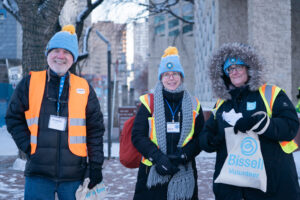
Bissell Centre is holding its annual Coldest Night of the Year walkathon on Saturday, February 28.
Beginning at YMCA Boyle Street Plaza (9538 103A Ave. Edmonton), the opening reception starts at 4:00 p.m. and walkers will set off at 5:00 p.m.
This event features hundreds of Edmontonians walking through the city’s downtown, in matching colourful toques, to help raise funds for Bissell Centre’s critical programs and services.
Last year’s walk
Last year’s walk saw close to 400 walkers on 79 teams helping to raise $150,000 for programs that help people find sustainable housing, increase their financial knowledge, connect to Indigenous culture, and provide essentials for families.
“There’s something powerful about seeing hundreds of people bundle up and walk together on a cold winter evening,” says Michelle Reid, Manager of Community Engagement. “It’s a visible reminder that our community cares deeply about making sure everyone has access to safe housing and supports.”
What to expect at the event
Teams of walkers have been raising funds since November and will continue until the day of the walk. Kicking off from Boyle Street Plaza, walkers can choose either the two kilometre route through City Centre or five kilometre route up to 109 Street before heading back to Boyle Street Plaza for a reception with warm food and soft drinks.
Reid says seeing people from the larger Edmonton community show up to walk alongside one another reminds her how events like these open doors for people and helps strengthen the community.
About Coldest Night of the Year
Coldest Night of the Year started back in 2011, with three Ontario ministries, to raise awareness around what their communities are experiencing. It wasn’t long before hundreds of organizations across Canada and the United States adopted the event, including Bissell Centre whose own Coldest Night of the Year walkathon remains an essential event to ensure it can continue offering its range of programs including in housing, financial empowerment, family supports, and Indigenous cultural supports.
It’s never easy when relationships end. For Claudia, separating from her husband also meant separating from the business they grew together.
“Without that business, I virtually had no income,” Claudia explains. “I was looking for work, but I couldn’t find anything for a long time.”
At the time, she was on income support while caring for two teenagers at home and it wasn’t long before the bills started piling up. But someone suggested that Bissell Centre might be able to help.
Discovering a new way to receive support
“Aside from seeing the name in print, I had never looked too deeply into Bissell Centre before reaching out for help,” says Claudia. “I wouldn’t have thought to reach out to Bissell Centre on my own.”
Shortly after her first meeting with the Community Bridge team, her outstanding bills were paid. The team then explored her financial situation to set up a personalized monthly repayment plan that allowed her to continue living comfortably and supporting her children as they entered adulthood.
Uncovering a streamlined path out of debt
Earlier this year, Claudia proudly paid back her loan from Community Bridge.
“Looking back, it was almost too easy,” she says with a laugh. “The whole process was so easy and respectful. It feels great to have paid it off and to be able to pay if off. The monthly payments were low and realistic to pay off.”
Today, Claudia’s two adult children are in university, and she works a steady job. She keeps up with her monthly expenses and supports her children.
“We’re living comfortably and have a lot of high hopes for the future,” Claudia says.
Thanks to support from ENMAX, the Community Bridge team has been able to connect with folks at risk and prevent them from being evicted and facing homelessness. Last year, Community Bridge helped 678 individuals just like Claudia, with almost 100% of program participants repaying their loans.
The 2020s has been an important decade for Canada’s relationship with the Indigenous Nations. We’re seeing large institutions like Canada’s federal government acknowledge and recognize the atrocities committed against Indigenous Peoples.
One incredibly important stride forward was the publishing of the Final Report from the National Inquiry into Missing and Murdered Indigenous Women and Girls (MMIWG). This more than 700-page report highlights interviews with more than 2,300 people affected by violence against Indigenous People.
These stories illustrate the challenges faced by women and girls, and the continued violence against members of the 2SLGBTQIA+ community. By reading this document, we can gain better knowledge on the marginalization experienced by Indigenous Peoples — and ultimately, have the wisdom and perspective to know what we can each do individually to help create a more equitable world.
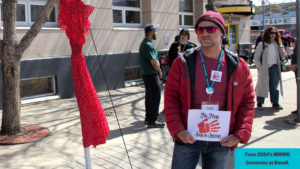
The Four Key Areas of Rights for Indigenous Peoples
In addition to the 231 recommendations the report makes to help end violence and marginalization against Indigenous Peoples, it highlights four key areas of rights for Indigenous Peoples and provides explanations as to how each help work towards this goal of ending violence:
- Right to Culture – this right specifically highlights previous generations trying to assimilate Indigenous Cultures and Nations and how these efforts created the foundation for the marginalization Indigenous Peoples continue to experience today.
- Right to Health – this highlights how all people within Canada have the right to access health care. For countless people rooted in Indigenous Nations, this is an area where they have experienced discrimination — this barrier to health care further adds to the violence experienced by Indigenous Peoples.
- Right to Security – countless stories shared through this national inquiry demonstrated the near constant threat Indigenous Peoples face while living day-to-day. And it’s not only physical security: emotional, mental, social, and cultural security are all key to ending this disproportionate violence.
- Right to Justice – experiences through Canada’s justice system can be incredibly inconsistent for Indigenous Peoples. These disconnections through Canada’s justice system can further perpetuate the violent experiences of Indigenous Peoples.
Why Education is Foundational to Ending Violence
While the 231 recommendations and the four key areas of rights largely focus on larger-scale systemic changes, that doesn’t mean everyday people are powerless to help steer this change along.
In fact, just being more aware of the kind of violence that Indigenous Peoples are facing is the perfect foundation needed to see the kind of change that will help end this violence.
Any meaningful action starts with awareness and education. With the knowledge and wisdom of the issues, their roots causes, and what needs to be done to address this inequity, the better you can direct your own actions to be more equitable to people rooted in Indigenous Nations.
And the more people there are who fully understand the issues and how to direct their own actions, the more forward momentum we can see to finally seeing an end to this disproportionate violence.