At Bissell Centre, our mission is to end poverty and houselessness in the community. In order to achieve this we need to fully understand what barriers people experience receiving care, the stigma they are forced to wear, what injuries are they suffering with and how we can best build programs to support individuals while they work their way out of houselessness and poverty.
Injuries can happen to anyone, at any time, creating new obstacles to daily living and changes in circumstances. What if you’re already facing barriers and obstacles to prosperous daily living? What if new injuries will further decrease your chances of leaving poverty and improving your circumstances?
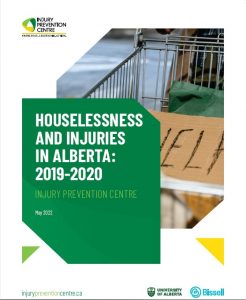
The Injury Prevention Centre gathered information from 2019 & 2020 to look at more than 11,600 emergency room visits. This report, Houselessness and Injuries in Alberta: 2019-2020, dives into what injuries are sustained and shows us which injuries are preventable. While no one can prepare and prevent all injuries, we can look at the data to determine priorities in programming.
One thing the data makes clear is that Housing First and harm reduction practices would prevent more than half of these injuries. We need to ensure we’re communicating this to the public, so that we can all work towards a community where people are safe no matter their circumstances.
We invite you to read the report below to learn more and see the data for yourself.
My name is Bill and I received a second chance at life after finding out about Bissell and the supports they offer. Bissell does amazing work helping those Edmontonians like me who are struggling to get by after life has kicked them down. And I’m so thankful I was able to access Bissell Centre’s programs back when I needed them most.
Back when Covid-19 first hit, I had a job at a restaurant, and plenty of experience in the industry. Then the restaurant closed without warning. It was total chaos for restaurants, like so many jobs, so finding work at another was impossible.
I didn’t have any savings, and soon I could no longer afford my rent. I had to give up my apartment and I moved into a rooming house. I didn’t know the people I was living with and there was no privacy. But hey, I had a roof over my head. I was grateful for that much at least.
Someone at that point told me about Bissell as a place to warm up and find something to eat. I didn’t think I’d ever end up going to a place like Bissell, but I’m glad I did. That first visit changed my life and it all started with a warm plate of food.
The food tasted great and the staff was even better. Everyone was so welcoming. That kept bringing me back.
But still, I found myself bored without a job, as I grew up on a farm where hard work is required and my motto has always been “if you’ve got time to lean, you’ve got time to clean.” As soon as the staff at Bissell knew of my urge to get back to work, they sent me to their Employment Services team, who were able to find me a steady job almost right away.
I wish I could say that’s the end of the story and everything worked out just fine.
Just as everything seemed to be falling into place and I felt like I had a second chance, I was hit with another blow: the rooming house I called home burned down. Everything I owned was now dust. I can’t begin to describe how I felt. I was scared, lonely, sad and angry all at once.
For the second time in one year, I was homeless. This time, thankfully I knew where to turn for help.
When I was homeless, all I could think about was how I was going to stay out of the cold, and where to find my next meal. Bissell was a warm place to go and always had a meal for me. After getting to know some of the staff, I reached out and asked for help finding a place to live and work.
The staff at Bissell got me connected with temporary lodging. Then I found another rooming house, but I didn’t feel safe there. Bissell Centre staff were able to connect me with their Community Bridge program and I found an apartment of my own.
I also now work full-time at the Bissell Centre Community Space and it’s so rewarding to work in the same space I once turned to for support. I don’t know where I would be without Bissell Centre and I am glad I never had to find out.
For me, all the support from Bissell started from a simple meal. Please make a donation to Bissell’s Easter meal and help others find the holiday meal that could be just the fresh start they’re looking for. Bissell’s Easter meal is an annual event and serves hundreds of Edmontonians. Your generosity (a single meal costs just $3.20) ensures that others receive the same helping hand that Bissell offered to me.
In the fall of 2021, cold winter weather was looming, and there was reduced shelter capacity in the local sector as a result of COVID-19 spacing requirements, This created an emergent need to provide shelter and safety from the outside elements for people experiencing homelessness. The Edmonton Convention Centre was opened as Tipinawâw, a 24/7 emergency accommodation space which was operated by several local partnering agencies. This video series shows the challenges and triumphs faced.
Episode One – Mobilizing for Winter
With cold winter weather looming, and reduced shelter capacity in the local sector as a result of COVID-19 spacing requirements, there was an emergent need to provide shelter and safety from the outside elements for people experiencing homelessness. The Edmonton Convention Centre was opened as a 24/7 emergency accommodation space and operated by local partnering agencies. While this response faced some significant challenges, there were also some great triumphs. We invite you into Tipinawâw.
Episode Two – More Than Just a Name
Tipinawâw not only provided shelter and safety from the outside elements for people experiencing homelessness, Bent Arrow Traditional Healing Society brought Indigenous culture to those at the 24/7 emergency accommodation space, allowing some to experience their own culture for the first time. This connectedness to one’s culture is a powerful step in their healing journey. We invite you into Tipinawâw.
Tipinawâw: Episode Three – Outbreak
Following public health guidelines like physical distancing is hard. It’s even harder when you don’t have a home to stay in. Tipinawâw provided a 24/7 space at the Edmonton Convention Centre for people experiencing homelessness to access day and night services as safely as possible. Boyle Street Community Services led Tipinawâw’s medical response to COVID-19, providing PPE, showers, wound care, and harm reduction services on-site. They developed a contact tracing system and helped clients access COVID-19 tests and isolation spaces. As COVID-19 cases rose across the province, measures at Tipinawâw helped slow the spread of COVID-19. We invite you into Tipinawâw.
Episode Four – Breaking the Cycle
Tipinawâw provided people experiencing homelessness with a warm, safe place to go over the fall and winter months. The 24/7 emergency accommodation space at the Edmonton Convention Centre did so much more than that; it also brought housing services to where people were at in their journey out of homelessness. Ultimately the solution to homelessness, is housing. We invite you into Tipinawâw.
Tipinawâw: Episode Five – Tomorrow
Through collaboration and caring, Tipinawâw provided vulnerable Edmontonians a warm, safe space to go this past winter, and directly connected them to housing options. In the final video of this series, we explore how the City and partner agencies came together quickly to help people experiencing homelessness during the height of the COVID-19 pandemic. What were the lessons learned? What will it take to end homelessness in Edmonton? Ultimately, the solution to homelessness is housing, and we are all stronger as a community when we are not leaving anyone behind. We invite you into Tipinawâw one final time.
Videos made in partnership with Bent Arrow Traditional Healing Society, Bissell Centre, Boyle Street Community Services, The Mustard Seed, the City of Edmonton, Edmonton Convention Centre and Homeward Trust. Video production: PlanIT Sound
Saroj Saher has volunteered with Bissell for an astounding 30 years and has seen Bissell grow substantially in that time.Over the course of a phone conversation, Saroj told me about her earliest days at Bissell and the manyroles she has filled as a volunteer.
In the early 1990s, she said,“Bissell Centre was very simple” with fewer services and programs than we have currently. Shortly after starting her volunteer tenure with Bissell, Saroj met with Bissell’s CEO, who raised the idea of hosting a dinner around the Christmas holidays. The CEO said that people typically donate much more food around Christmas which would build up and couldn’t be distributed quickly.
So, Saroj quickly signed on to spearhead what would become a regular Bissell tradition, the New Year’s Day Dinner.It turned out that the dinner required more work and a much bigger kitchen than anticipated. Over the years Saroj has forged many contacts with enthusiastic organizations who want to contribute their time and skill to preparing the dinner, ranging from large restaurants to NAIT’s commercial kitchens.Planning an event as large as the New Year’s Day Dinner takes a lot of time for staff and volunteers alike, but by all accounts, Saroj is far from done giving her time and extensive expertise to the cause.
The New Year’s Day Dinner has come a long way since it started, providing over 1200 meals in its most recent iteration. However, for Saroj, giving back goes beyond big events like the dinner. As she says, “If you do a kind gesture, it’s contagious. You can give 1 dollar, a quarter, someone will see you giving, and it continues.” However large or small the gesture, Saroj firmly believes that when one person gives, others are motivated to do the same.
Volunteer work is a matter of bothduty and passion for Saroj, “I believe that I am better off financially…why I can’t I help? I have more privileges, so why can’t I share?” Saroj’s passion for the work we do at Bissell is evident right away when you talk to her. I asked what the best part of volunteering with Bissell has been and immediately Saroj replied “oh, I love it, I just feel so happy...there is a lot of connection there. I felt connected to [participants].”
That sense of connection goes both ways as Saroj shared stories of participants who will come running up to her at events to catch up and the many stories she has learned over the years. It’s evident from talking to Saroj that she cares deeply about people and has an incredible drive to serve.
If there’s one thing Saroj wished people knew about Bissell it is simply that “Bissell Centre is there to help.” Her passion for Bissell Centre’s work comes from the variety of services and programs on offer and the way that staff and volunteers engage with participants,“a smile can make a lot of difference.”
Finally, what would Saroj tell someone who is thinking about volunteering with Bissell? “I would say go ahead, go, go!Don’t be scared. Try once, at least once. That experience, you will never forget.” As we end our call, Saroj reiterates her gratitude for the many people who have helped her at Bissell and tells me that whatever we need, she is there to help. After 30 years of volunteering with Bissell, Saroj seems more motivated than ever. I have no doubt that the next time we host New Year’s Day Dinner, Saroj will once again be in the thick of things, more than likely leading the way.
My name is Chance. I’m 25 years old and live at Hope Terrace, a permanent supportive home that is run by Bissell Centre. I have Fetal Alcohol Spectrum Disorder—a type of brain injury with no cure—so I need help with things like coping with my emotions, keeping appointments, and cooking.
Before I moved into the Hope Terrace residence, life was frustrating and stressful. I used to live at my grandmother’s house, along with my mom and four other family members. When everyone was home, it was chaos, which made it even harder to manage my emotions—even happy emotions were too much at times.
A lot of times, I would blackout because my emotions got too intense. I do my best to keep my anxiety and bipolar symptoms under control, but it can feel impossible without proper support.
Mom and I knew I needed help, but we didn’t have money and we didn’t know where to start. So, a few years ago, I tagged along with my friend to Bissell Centre’s Easter meal. He was getting help from Bissell and seemed to like it enough. Maybe I could get help too?
It was at that very meal that I first heard about Bissell’s mental health resources and the Hope Terrace house.
When I was invited to move into Hope Terrace a few months later, Mom and I both agreed it would be a good decision. I finally felt some hope. Maybe life doesn’t have to be so hard all the time? Maybe I could have a better life?
The staff here help me with the things that overwhelm me most—like budgeting, cooking, and dealing with my emotions. They are awesome! They’re really good, kind people—they’re my family.
Without the support that I regularly get here, I don’t know where I’d be.
My name is David and the holidays are a lonely time for me. You see, I lost my entire family in three tragic accidents.
I couldn’t cope with the grief, so turned to substances to find peace. Thankfully, Bissell Centre was there to pick me up when I needed help.
So how did I get here? Ten years ago, my wife and I were living our dream, running a successful catering business in Vancouver. But that was before a drunk driver took my wife’s life. My wife was my partner, my best friend—I didn’t know how to go on without her.
The heartbreak was still fresh for me when six weeks later a work accident claimed the life of my 23 year-old son. His harness broke during a brutal storm when he was checking mobile towers. In the blink of an eye, he was gone.
I thought things couldn’t get any worse, but I was wrong.
A few months later, I got a call that my daughter’s car had veered from the road on her way to Whistler. The snow flurries made it nearly impossible to see. By the time she was found, she’d frozen to death in her car.
It was unthinkable. In five months, my entire family was gone.
For a long time, I used alcohol to numb the pain of losing my wife and children. Eventually, I got really sick and was sent to Edmonton for rehab.
But with sobriety came more darkness. So I turned to heroin.
Whenever I used, I was depressed and alone—must trying to forget my reality.
My rock-bottom came when I was arrested for carrying drugs. In jail, I had a lot of time to think about the man I wanted to become. I knew I needed to make some huge changes if I wanted to be happy again and become the man my beloved wife and kids knew me to be.
Bissell Centre was the first place I went after being released.
The staff greeted me with kindness. Instead of judging me, they smiled, welcomed me and handed me a warm plate of food. The staff told me about their mental health and housing support programs, and I was blown away.
For the first time, I realized that I didn’t have to rebuild my life alone.
Alone we can do so little; together we can do so much – Helen Keller
Collaboration is not new to Bissell Centre and our fellow social service agencies. We have often sat at the same tables advocating for the individuals we serve; providing a unified voice for those who may not otherwise be heard. We work together to provide services that meet the needs of those experiencing poverty and homelessness, trying to ensure there is enough supply to meet the demand.
The COVID-19 pandemic simultaneously increased the need and reduced our ability to supply services to meet the growing demand of an estimated 180 people were becoming homeless each month. As the cold weather approached, the City of Edmonton took action to provide housing options for everyone.
From October 30 the 24/7 Emergency Response Accommodation, operating from The Edmonton Convention Centre, will offer round-the-clock support and services for up to 300 people overnight and up to 400 people during the day. Individuals who come to the 24/7 Emergency Response Accommodation will have essential services like food, clothing and a warm place to sleep, but will also have access to health and wellness support, including harm reduction services.
As the doors opened this weekend, the mood was warm and welcoming as hundreds of participants were able to access the services they need.
“The solution to homelessness is housing and support services…”
All partners recognize that temporary housing is not the solution to homelessness. The solution to homelessness is housing and support services, and all participants at the 24/7 Emergency Response Accommodation were connected with a housing support worker who will help them find longer-term housing.
Bissell Centre was responsible for managing the day shelter and housing services at the 24/7 Emergency Response Accommodation, ensuring that there are provisions and staff for laundry, showers, meals, storage and security measures as well as coordinating the housing services.
The 24/7 Emergency Response Accommodation stands for everything Bissell stands for; a welcoming space where everyone is important, every story is worth hearing and every life is meaningful. Bringing this to life is a tall order, but one we are prepared to fill. To focus on these efforts, the drop-in services at the Community Space at Bissell Centre were temporarily suspended.
Just a short walk away, back at home base, other essential Bissell Centre programs continued to support participants experiencing poverty.
Employment Services is sourcing and providing casual labour placements for those looking for work. They are also offering job skills training and other job-ready programs.
Financial Empowerment workers will continue to provide individuals and families with financial literacy education, assistance with tax filing and accessing government benefits, and support to access basic banking.
Housing support workers will be onsite at the convention centre AND continue to reach out into street communities, learning about participant needs and addressing them with housing solutions.
The Family Support team continues to visit families in their homes, providing diapers and formula and clothes as well as support with food and transportation.
Bissell’s Early Childhood Development Program Opened its new doors on Nov 2, ready to provide high-quality care for nearly twice as many children as the previous space.
We were excited to be a partner in the convention centre, as we continued to evolve our programming while keeping everyone safe.
Together we are stronger, together we are safer, together we are happier. Thank you for standing together with us towards a future without poverty.
September is Fetal Alcohol Spectrum Disorder (FASD) month. Since 1999, FASD activists have held World FASD Awareness Day events on 09/09 to represent the nine months of pregnancy, often highlighted with a bell-ringing ceremony at 9:09 am. FASD is a lifelong disorder that affects people from all walks of life. It occurs as a result of prenatal alcohol exposure (PAE) and can result in a range of disabilities. In Alberta alone, approximately 46,000 individuals are currently impacted by FASD. Adults living with FASD face challenges daily due to the invisible nature of the disability impacting executive functions in the brain. Individuals with FASD often experience challenges with motor skills, daily living skills, emotional regulation, physical health, learning, attention, communication, memory, and social skills. Supporting people with FASD, through community support and on-site services can help them live independent and sustainable lives. Here at Bissell Centre we use a Person-Centered Planning approach in a holistic manner to provide a variety of services to support men and women with FASD.
FASD is a spectrum disorder that affects each individual differently.
Bissell Centre understands that FASD is a spectrum disorder that affects each individual differently. We strive to offer a variety of supports that accommodate the uniqueness of each person. Our Parent Child Advocacy Program (PCAP) is for pregnant women or those up to 6 months postpartum who are at high risk of using substances. PCAP helps them have healthy pregnancies, healthy babies, and healthier post-partum outcomes. The PCAP model is focused on harm reduction and is not abstinence based, though that may be a goal. The Adult Advocacy program provides outreach services to individuals with FASD, meeting them where they are at, brokering connections to government and community resources, and encouraging familial connections. Both programs follow a three year progression – the first year is building a therapeutic relationship with the advocate, the second year is interdependence, and the third year is successfully transitioning in to the community at large. Hope Terrace is a Permanent Supportive Housing program (PSH) where trained and equipped Bissell Centre staff provide a respectful, collaborative, and non-judgmental approach when interacting with residents under a harm reduction philosophy. The goal of Hope Terrace is to provide stable housing for individuals that have experienced chronic episodes of being houseless. Through on-site supports such as 24/7 Personal Support Workers, a Mental Health and Addictions Coordinator, and an Occupational therapist we are able to provide a holistic approach in order to achieve stable, permanent housing for our individuals that experience being houseless due to the complex nature of FASD.
Bissell Centre also focuses on increasing FASD knowledge and understanding within the community of support workers and other stakeholders, such as the police and emergency services. We organize and facilitate monthly FASD Frontline meetings where workers can bring challenges, issues, and concerns to the table to brainstorm around best strategies and practices to support people with FASD. These meetings help prevent information silos and enable networking opportunities. As well as have presenters come in to speak about programs and topics that are relevant to the work that the frontline workers do, which may supplement their resource knowledge.
It is through these programs that we can empower individuals who are living with Fetal Alcohol Spectrum Disorder (FASD).
We were excited to open the doors to our Community Space on August 17, 2020, once again providing an inviting, engaging and welcoming environment for the community. Operations look a little different during Covid-19, but participant needs always come first at Bissell Centre. While we adapt our activities to meet health and safety requirements set out by the Chief Medical Officer of Health, we remain committed to our community and meeting their needs in a friendly space.
How have operations changed in the Community Space?
Screening and Sanitizing: We will be conducting health screens at the door. Individuals without COVID-19 symptoms will wash/sanitize their hands upon entry.
Food Safety: We will continue to provide healthy food and beverages, which will be served to participants in individual packaging, and there will not be any sharing of food.
Reduced Capacity: To maintain physical distancing requirements, the Community Space will have a maximum capacity of 30 people at any one time. We will be monitoring numbers at the door so that as many people as possible can gain access to services throughout the morning.
Tracking: We will also be tracking attendees that come to the Community Space. Should a case of COVID-19 be present in the future, this information can be used for potential contact tracing.
Reduced Hours: This applies only to “drop-in” services, allowing time to maintain cleaning and sanitizing procedures in our building. This also provides staff more one-to-one time with participants to help them move out of poverty.
Face Coverings: Are mandatory to access the space although exceptions are allowed as per the City of Edmonton Bylaw 19408
How these changes may affect the community?
Eliminating poverty remains our vision and our top priority. The “drop-in” nature of the Community Space provides immediate essential needs and also serves as a platform for Bissell staff to engage with participants to help them achieve long-term success. Reducing capacity in the community space means we can have more intentional conversations with participants and build even stronger relationships, to help people access the supports and resources they need to move out of poverty.
Bissell Centre’s programs are designed to provide a holistic approach to supporting individuals and families to get out of poverty. We have increased the integration of services so that participants can more easily access employment, housing, and financial supports.
The reduced hours for drop-in services create more time for individual appointments providing intentional support for moving people out of poverty. Non “drop-in” hours will be used for appointments and program-based supports.
Working together to keep our Community Space open
Life under the threat of COVID-19 is challenging for everyone. Bissell Centre remains fully committed to meeting the needs of participants while working with government and local partners to find alternate solutions so we can continue to ensure safety for everyone in our community now and in the future.
Homeless Amid Covid (#HomelessAmidCOVID) is a video series highlighting Edmonton’s collaborative response to protect people experiencing homelessness during COVID-19.
Take a tour through the Day Drop-in that was located at the Edmonton Expo Centre to learn about the critical services provided and how collaboration has kept people safe and supported through the pandemic.
Episode 2 – The Isolation Shelter
In the second episode of this series, we’ll take a walk through the Isolation Shelter, a temporary facility that was set up to provide screening, testing, health services and self isolation space for Edmonton’s most vulnerable people during the COVID-19 public health crisis.
Episode 3: A Way Home
In the third episode of this series, we meet Rob, a Boyle Street client who details his story from homelessness to housing through the bridge housing offered at the Coliseum Inn. This was made possible by the coordinated service delivery available to people experiencing homelessness through Edmonton’s collaborative response during the COVID-19 pandemic.
Episode 4: Behind the Data
In the fourth episode of this series, we learn about the key role Edmonton’s innovative and data-driven systems play in supporting and moving people out of homelessness, and how these systems have been able to adapt during the pandemic.
Episode 5: A Safe Place
In the fifth and final episode of Homeless Amid COVID, we learn how the quick, sector-wide response of more than 20 organizations and all levels of government, led to impactful front-line efforts that provided a much-needed safe space for those experiencing homelessness in Edmonton during the pandemic.
While the Expo Centre was a short-term solution to provide these supports and services, the work of keeping this vulnerable population safe continues. Ultimately, the solution to homelessness is housing.
Funding support from the Government of Canada’s Reaching Home program, the Government of Alberta – Ministry of Community and Social Services and the City of Edmonton.