After spending her career working at a bank on Jasper Avenue, Debbie was committed to continuing to make a positive impact in her community after she retired. Already knowing Edmonton’s many not-for-profits, she had a strong idea of where she wanted to volunteer her time.
“I’m familiar with the people, I’m familiar with the community. It’s something I I’ve always felt drawn to,” explains Debbie. “I was the go-to person to help community members while I was working, so it was kind of a good segway to volunteering here.”
Debbie is just one of the many volunteers we want to recognize and celebrate National Volunteer Week. With the help of volunteers we house people, return money to the community through filing taxes, and opening doors for those needing support.
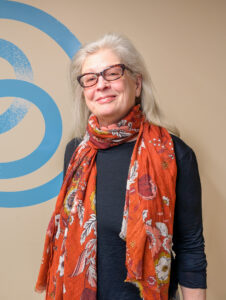
Volunteer Debbie
Using career skills to help people in the community
With a background and career in finance, Samantha was ready to find opportunities to give back outside of her west-end community. She had previously volunteered for her local community league and schools in her neighbourhood, but was curious about a larger impact she could make for a community in need.
Samantha volunteers through the tax clinic — filing 15 to 20 different tax returns each week, up to 1,000 different tax filings each year. She explains that the work itself is relatively easy (and almost kind of fun for her),and seeing how much money people in the community receive exhilarates Samantha the most.
“There are so many people that don’t do their taxes, and they’re leaving all this money on the table,” explains Samantha. “Taxes for people can be intimidating, so [this is] a place to be able to overcome the barriers they have and navigate some of those challenges people might experience.”
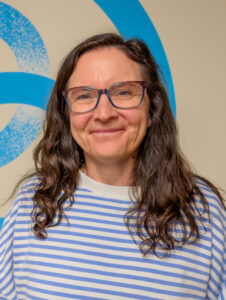
Volunteer Samantha
Walking and connecting with the people who need support
Everyone who volunteers with Bissell Centre brings unique skills and motivation for giving back — for university student Jashan, he simply knows it’s the right thing to do. Inspired by his cousin’s volunteer work in Vancouver, he looked up similar organizations in Edmonton. Bissell Centre was exactly what he was looking for.
“It gives me more real satisfaction knowing I’m helping people,” says Jashan. “I get to talk to so many different people with so many different stories. And I get to look in the mirror at the end of the day and know that I did something real today.”
Jashan finds anywhere and everywhere to contribute that his busy post-secondary schedule allows. From making deliveries to working in the Thrift Shop and taking part in major fundraising events like Coldest Night of the Year, it’s all about getting his boots on the ground and connecting with the people.

Volunteer Jashan (far right) at Coldest Night of the Year
A community of support
Much like Jashan, Debbie’s volunteer focus is connecting with people needing support and making as much of a positive impact as she can. She’s helped with a few different programs at Bissell Centre and today helps at Service Hub reception. She explains she’s often the first person people see when they come through the doors — and hopes a friendly smile helps people feel more comfortable and confident as they uncover their unique pathways out of homelessness and poverty.
Many people who choose to volunteer their time with Bissell Centre are motivated by a deep-seated desire to help people in any way they can. At the end of the day, what many volunteers with Bissell Centre want most is knowing that they did something to help strengthen the community.
If you’re interested in volunteering your time with Bissell Centre, reach out and discover how you help ensure programs reach people as they uncover their unique paths out of poverty and homelessness.
People across the greater-Edmonton region are invited to Bissell Child Care (9331 105 Ave. Edmonton) on March 28, 2026, from 10:00 a.m. to 2:00 p.m. for its spring open house. Bissell Centre’s child care program is catered to children newborn to six-years-old, with spaces reserved for families needing full time care or respite care.
“This is an excellent opportunity for parents to see first-hand what makes Bissell Child Care so unique,” says Jaye Brown, Manager of the Early Childhood Development Program with Bissell Centre. “This is a space where programming has benefited countless children and continues to give them an incredible start to life before they enter kindergarten.”
A History of Quality Child Care in Edmonton
Bissell Centre has been running a respite child care program since the 1970s, expanding to offering full-time child care services when its new child care space opened in 2020. Children attending Bissell Child Care receive one meal and two snacks every day (provided by Bissell Harvest Catering), can attend field trips all summer long, and have access to specialized supports — all at no additional cost to parents.
“Bissell Child Care is not only for families living in the downtown core and experiencing instability,” says Brown. “We are an inclusive environment that recognizes how everyone can be a part of this community and we welcome all children and their family.”
Crucial to Bissell Centre’s Mission in the Community
Guests can treat themselves to light snacks and refreshments as they explore the nature-inspired space where children play, learn, and thrive. Educators and leaders will be on-site during the event to answer questions and provide guided tours with more information on what parents can expect when sending their children to Bissell Child Care.
Bissell Child Care is just one of Bissell Centre’s social enterprises that seeks to help fund Bissell’s crucial programs: also including Bissell Thrift Shop and Bissell Harvest Catering. All funds raised are directly invested back into programs helping people uncover their unique paths out of poverty and homelessness — increasing Bissell Centre’s capacity to meet people where they are at and help strengthen the community.
Bissell Centre is expanding its crucial Financial Empowerment program to better serve diverse communities facing poverty and housing instability.
With funding from Prosper Canada’s Resilient Futures program, Bissell Centre is partnering with Métis Money Moves and the Canada FASD Research Network (CanFASD) to make its Financial Empowerment programming more accessible and relevant to people rooted in Indigenous Nations and people with FASD — two demographics disproportionately experiencing poverty and homelessness.
This collaboration begins in March with Bissell Centre team members presenting Métis Money Moves’ culturally informed financial education program at the Stanley Milner Edmonton Public Library.
Finance from an Indigenous Perspective
“Indigenous teachings about things that relate to money go deeper into why a person wants to be better with finances,” says Sophia Mejia, Manager of Specialized Services with Bissell Centre. “It helps provide more personal autonomy and asks reflective questions prompting people to provide personal motivations to help them gain a better understanding around finances.”
While the Bissell Centre team leads these sessions, Métis Money Moves and CanFASD are reviewing Bissell Centre’s existing Financial Empowerment program and to create workbooks tailored to the needs of Indigenous people and people with FASD. This is expected to continue until 2027, with the new Financial Empowerment program rolling out in 2028.
“Métis Money Moves is making change for the next seven generations, empowering individuals and families to gain a deeper understanding of their money and reducing recidivism back into houselessness,” says JoLynn Parenteau, Métis Money Moves’ Founder and Facilitator. “In 2026, Métis Money Moves will reach more households than ever before, made possible by the leadership and vision of Bissell Centre’s Financial Empowerment and Prosper Canada’s Resilient Futures programs.”
Funding from Prosper Canada’s Resilient Futures Program
Resilient Futures is a $60 million, multi-year initiative that will support community organizations across Canada to expand free financial empowerment services — such as tax filing help, assistance accessing government benefits, and financial coaching and counselling — for people with low and modest incomes. The initiative aims to reach one million people and connect them with an estimated $2 billion in income benefits and tax credits.
To register for Métis Money Moves’ program, or for more information about this partnership, visit the Edmonton Public Library website.
Bissell Centre is holding its annual Coldest Night of the Year walkathon on Saturday, February 28.
Beginning at YMCA Boyle Street Plaza (9538 103A Ave. Edmonton), the opening reception starts at 4:00 p.m. and walkers will set off at 5:00 p.m.
This event features hundreds of Edmontonians walking through the city’s downtown, in matching colourful toques, to help raise funds for Bissell Centre’s critical programs and services.
Last year’s walk
Last year’s walk saw close to 400 walkers on 79 teams helping to raise $150,000 for programs that help people find sustainable housing, increase their financial knowledge, connect to Indigenous culture, and provide essentials for families.
“There’s something powerful about seeing hundreds of people bundle up and walk together on a cold winter evening,” says Michelle Reid, Manager of Community Engagement. “It’s a visible reminder that our community cares deeply about making sure everyone has access to safe housing and supports.”
What to expect at the event
Teams of walkers have been raising funds since November and will continue until the day of the walk. Kicking off from Boyle Street Plaza, walkers can choose either the two kilometre route through City Centre or five kilometre route up to 109 Street before heading back to Boyle Street Plaza for a reception with warm food and soft drinks.
Reid says seeing people from the larger Edmonton community show up to walk alongside one another reminds her how events like these open doors for people and helps strengthen the community.
About Coldest Night of the Year
Coldest Night of the Year started back in 2011, with three Ontario ministries, to raise awareness around what their communities are experiencing. It wasn’t long before hundreds of organizations across Canada and the United States adopted the event, including Bissell Centre whose own Coldest Night of the Year walkathon remains an essential event to ensure it can continue offering its range of programs including in housing, financial empowerment, family supports, and Indigenous cultural supports.
Edmonton has a variety of free and low-cost services geared towards families. These include clothing, food, shelter, and respite child care. Check out the list below! Not sure where to start? Our Family Supports team can help.
Our Family Supports team works with families to understand their individual needs and helps them navigate services available — even acting as advocates for some families we walk alongside to help strengthen family units and the community.
If you want to meet with our Family Supports team, you can find them at the Bissell Centre Service Hub at 10527, 96 Street. You can contact our Family Supports team directly:
If you’re reaching out to any of the services on this list, please visit their websites for their criteria. For a full list of additional services, call 211.

Free or low-cost clothing
Mill Woods United Church
Saint Vincent de Paul
Building Hope
Amity House
Suit Yourself
Terra Centre
Care Closet
Free Food or Meals
Building Hope
C5 Hub Food Pantry
Candora Society
Hope Mission
Freedom Centre Church
Edmonton Food Bank
Food Not Bombs
Wecan Food Baskets
Native Healing Centre
Native Friendship Centre
Pantry N More’
Bethel Church
Shelters
Hope Mission
The Mustard Seed
Boyle Street Community Services
WIN House
Wings of Providence
Bear Lodge
E4C
Lurana Shelter
A Safe Place
Respite Child Care
Bissell Child Care
Norwood Child and Family Resource Centre
Kids Kottage
Kids Without Limits
A Safe Place
Too many Edmontonians face a difficult decision every month — pay bills or pay rent.
This was the reality for Katherine (name changed to protect privacy) — and she almost lost her home. As a single mother of two with a part-time job and extra monthly support coming from Alberta Income Support, she was still falling behind and facing an imminent eviction.
After working with her employer to change her job to full-time, she lost her Alberta Income Support benefits and found herself still needing extra help to ensure she and her two sons wouldn’t be evicted from their home. With the eviction notice in-hand, she connected with our Community Bridge program for help.
The main goal of Community Bridge is to prevent evictions and ensure people at risk don’t experience homelessness. Through financial education, benefits navigation, and direct financial assistance, this program seeks to not only prevent immediate evictions, but also help ensure individuals don’t have to face these challenges again.
“Katherine came to us already taking the initiative to change her part-time work to a full-time job,” says Katrina John-West, Manager of Homelessness Prevention and Housing Support with Bissell Centre, where she oversees the Community Bridge program. “Her Alberta Income Support had ended and having a full-time job still wasn’t enough to help her catch up.”

How Community Bridge Helped Katherine
To ensure Katherine could break from this cycle, the Community Bridge team helped her in three areas to pay off her remaining debt and guarantee her housing stability. The first step was making sure Katherine could receive emergency income benefits from Alberta Income Support.
“What some folks don’t know about Community Bridge is we can act as advocates for people,” explains Katrina. “We can also make references to other sources of financial assistance that folks might not know exist.” In addition to advocating for Katherine’s Alberta Income Support emergency benefits, the Community Bridge team connected her with benefits from the Society of Saint Vincent de Paul. Financial benefits helped, but didn’t cover all her debts — which were collecting interest.
The second approach to helping Katherine came in a one-time, interest-free loan from the Community Bridge program. This lump sum assistance is, on average, paid back within one year of receiving it — even without any timelines or pressure from Community Bridge. “How quickly and frequently folks can pay back this assistance shows us how much we’re helping their financial situations,” says John-West. “It’s setting people up for the best successes possible so they can become empowered with their finances.”
The third type of support Katherine received was a referral to Civida, Edmonton’s largest affordable housing provider. This referral was for additional rent assistance benefits, but many qualifying folks also find new and more affordable homes with Civida — further breaking the cycles faced by countless Edmontonians.

Avoiding Eviction, Controlling Finances, and Finding Stability
Today, Katherine remains in her home with her two sons, now both teenagers and preparing for adulthood. She’s regained control of her finances, cleared out all her debts and arrears, and continues to work full-time while maintaining her household.
“Katherine is a really special success story,” says Katrina. “Many times, we’re meeting people who are in the middle of being evicted or aren’t able to work. Katherine was doing everything right and the odds were still stacked against her. Everything she needed was within reach — she just wasn’t sure where to look. I’m so proud that the team could point her in the best direction for her and her family.”
Thanks to support from ENMAX, the Community Bridge team can continue connecting with folks at risk and prevent them from being evicted and facing homelessness. “We believe in empowering our communities and helping more people access the essentials for a healthy, thriving life,” says Krista Moroz, Manager, Community Partnerships & External Relations at ENMAX. “By supporting Bissell’s Community Bridge Program, we’re not just helping individuals and families in crisis — we’re also investing in the long-term strength of our community and a brighter future for all Edmontonians.”
From January to October 2024, we helped 464 individuals, just like Katherine, facing immediate evictions from their homes. Best of all, 96% of the people we help through Community Bridge stay in their homes. We can’t thank organizations like ENMAX enough for their support — without our generous funders, we wouldn’t be able to offer the crucial help that’s needed throughout our city.
June is an important month for Bissell Centre – it’s both Pride Month and National Indigenous History Month. There is a close connection between what Pride Month is all about and Indigenous history in our country.
Countless Indigenous Nations across what’s now called North America saw Two-Spirit Peoples as not only an engrained and normalized part of their culture — Two-Spirit Peoples were often highly regarded and seen as a gift from the Creator.
“They were a very important part of Cree society,” says Elder Ed Lavallee. He is a traditional Plains Nehiyaw (Cree) of the Sturgeon Lake First Nation in Saskatchewan whose career in advocacy for Two-Spirit Peoples has seen him collaborate with groups like Pride Edmonton, the Edmonton Queer History Project, and the Edmonton 2 Spirit Society. Quotes from Elder Ed Lavallee reflect the distinct experience of the Plains Nehiyah Peoples.
“They had many roles in the daily lives of their people and were respected and revered for being Two-Spirited. They were often healers, shamans, mediators in marriage and tribal disputes, keepers of their history and their lore, and taking part and often leading in their social and Spiritual Ceremonies.”
While colonial efforts tried to wipe out any non-conformity from a person’s ascribed gender, the presence of these folks never went away. It wasn’t until 1990 that this way of being was finally given a general English translation to help people across Canada understand that, for countless Indigenous Peoples today, there are far more than only two genders.

The Five Genders
For Indigenous Nations in what’s now called Alberta, there are five genders in the community: male, female, male with female spirit, female with male spirit, and transgender.
“Indigenous people believe that both the female and male spirits reside in the body of a Two-Spirit Individual and the degree of dominance of each spirit ultimately impacts the physical, emotional, mental and spiritual identity of each Two-Spirit person,” says Elder Ed Lavallee.
Rather than trying to change people to better fit with the gender they were born with, Indigenous Nations instead made room for these people and ensured they could contribute to the community with the tasks and skills they identified with most.
Males with female spirits could take on cooking and cleaning duties, were widely seen as gifted artists, and some Nations even saw them adopt orphaned children to take on a caregiver role. Females with male spirits contributed by hunting and being warriors. Some Nations saw females with male spirit folks marrying widowed women.

The Reverence for Two Spirit Peoples
In addition to the everyday contributions Two-Spirit Peoples made to their communities, their gift of having two spirits within them also meant they were good healers, medicine people, and visionaries. This is because the two spirits in them give them what’s called double-vision — the ability to see the world through both the male and female lens.
“The belief that Cree Two-Spirit People are special is epitomized in the existence of a powerful Two-Spirit Deity known as Qweskicanskew,” adds Elder Ed Lavallee. “In their spirituality, they believe this Spirit turns things around for the good and well-being of all things on earth. This important Spirit is called upon in prayers for help, protection and blessings.”
Two-Spirit Peoples were foundational to their communities. During colonization, Two-Spirit Peoples’ place in the world seemed to no longer exist. Through the mid- to late-twentieth century, as more Indigenous Peoples began to reclaim their identities, it was clear the different terms used in different Nations like Nádleehí (nad-lay-hee), Winkté (wink-tay), and Niso-acahk-iynew (nee-soh-achak-ee-noo) needed a translation for the wider public to understand.
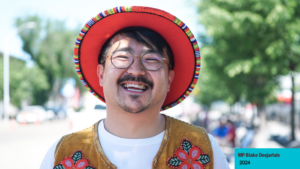
Bringing Two Spirit to the Wider Public
In 1990, at the Third Annual Intertribal Native American, First Nations, Gay and Lesbian American Conference, Elder Myra Laramee put forth the term Two-Spirit. The term is a translation from the Anishnaabemowin (Ojibwe language) term Niizh Manidoowag (neez man-ee-doo-wog). It was added to the front of the Pride acronym (2SLGBTQIA+) in recent years and was even a part of the focus for the Federal 2SLGBTQIA+ Action Plan launched in 2022.
Today, knowledge and understanding about Two-Spirit Peoples is spreading, but is still far behind from where it was before colonization. People like Dr. James Makokis (a Two-Spirit doctor from Kehewin Cree Nation) and MP Blake Desjarlais (a Member of Parliament from Edmonton) are sharing their stories to help more people understand why Two-Spirit Peoples are an essential part of their Nations – and to reduce the stigmatization around people living their authentic lives.
“They are emerging from their long decades of oppression and marginalization working toward re-establishing their rightful roles in their communities as they go through this period of rediscovery,” says Elder Ed Lavalle. “They are working to be recognized, respected and engaged in an integral manner, within Indigenous communities and society in general.”
This Pride Month and National Indigenous History Month, we’re celebrating the bravery of Two-Spirit people coming out and bringing this piece of Indigenous culture to the public forefront. We hope you’ll join us in making room for Peoples who can walk in both worlds to share their gifts and help make this world a more equitable place for everyone.